
Introduction
Unlike traditional coding methods, UV laser marking uses cold marking technology, which causes minimal thermal damage and is a permanent marking method. There is absolutely no need to worry about issues such as ink adhesion or consumable costs.
UV laser marking machine uses ultraviolet laser technology to create high-contrast permanent marks on plastics, glass, electronics, and other precision products.
What is a UV laser marking printer?
UV laser marking machines are developed using 355nm UV lasers. They feature an extremely small focused spot and have minimal thermal impact on the processed area, which is why this process is also known as “cold processing.”
UV laser printers are primarily designed for ultra-fine marking applications, such as pharmaceutical packaging materials, polymer packaging bottles, PCBs, and electronic components.
How does an ultraviolet laser machine work?
Ultraviolet laser marking machines use a laser beam to create permanent marks on the surfaces of various materials. By directly breaking the molecular bonds on the material’s surface with high-energy ultraviolet photons, they generate minimal heat, making them particularly suitable for non-destructive, precision etching and marking of heat-sensitive materials.
Key features of UV laser printing machine
Damage-free laser marking technology
The cold processing technology used in UV laser printing machines generates virtually no heat during the laser processing, and its heat-affected zone is small (less than 0.1 millimeters), which helps prevent damage, deformation, and charring of the workpiece, thereby improving the yield rate.
Ultra-fine marking accuracy
UV laser machines feature short wavelengths and a small focused spot size (as small as 15 micrometers), enabling them to meet ultra-fine marking requirements and making them an ideal choice for applications that demand high precision. This is particularly true for fine laser marking on heat-sensitive materials, such as glass, ceramics, films, HDPE/LDPE/acrylic plastics, and automotive parts.
Permanent and chemical-resistant marks
Non-contact laser processing requires no consumables or chemical reagents, is environmentally friendly and pollution-free, and can achieve permanent markings that are resistant to chemical corrosion.
*The above data is sourced from the TINHO intelligent factory.
UV laser printing machine applications
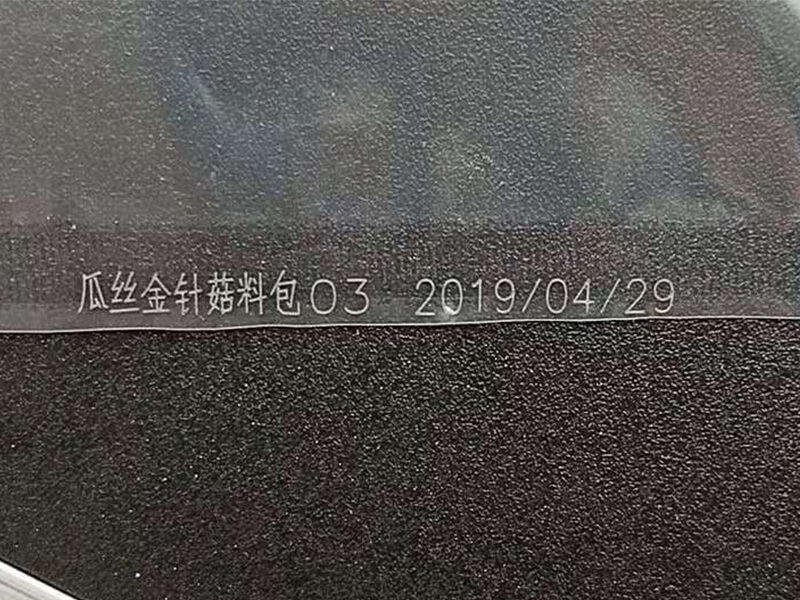
UV laser printer for pastic:
- ABS, PC, PP, PE, & PVC: UV lasers overcome low absorption rates to mark these materials smoothly, creating crisp text without thermal distortion, surface blistering, or toxic fumes.
- Electronic Housings: Etches wear-resistant serial numbers onto thin-walled casings without warping the frame or damaging inner circuits.
- Cosmetic Packaging: Delivers high-precision branding and tracking codes on smooth containers without ruining aesthetic appeal.
- Medical Devices: Creates permanent, biocompatible identifiers that withstand harsh sterilization without degrading the plastic.
UV galvo laser printer for electronics:
As electronic parts shrink, heat management is critical. UV laser markers deliver ultra-fine beam spots ideal for high-density micro-marking on delicate components.
- PCBs: Marks solder masks clearly without scorching underlying copper traces.
- Chips: Etches thin sealing resins without penetrating to sensitive internal components.
- Connectors: Delivers clear, readable pin identification on micro-sized terminals.
Ultraviolet laser marker for Packaging:
UV lasers provide high-speed, ink-free traceability directly on packaging lines, generating permanent, tamper-proof codes.
- Bottles: Applies batch codes to HDPE, PET, and glass bottles without creating pinhole leaks.
- Caps: Marks sharp QR codes on closure caps for anti-counterfeiting tracking.
- Cosmetic Containers: Etches fine logos on delicate tubes and jars while maintaining a premium finish.
UV laser printer for glass and transparent materials
Brittle, heat-resistant glass easily cracks under standard lasers. The UV laser's high absorption rate modifies surfaces with extreme precision, avoiding thermal stress.
- Glass Bottles: Produces crisp, frost-like logos and metrics without weakening the glass structure.
- Lenses: Creates ultra-fine alignment marks and scales on optical lenses without micro-cracking or distorting optics.
Frequently asked questions about ultraviolet laser marker
As previously mentioned, the primary advantages of UV laser marking technology lie in cold processing, ultra-fine marking, the absence of consumables, and permanent marking.
The theoretical lifespan of a UV laser marking machine is 12,000 to 15,000 hours; however, based on actual customer feedback and factory data, the practical service life is 1 to 3 years.
The primary differences between fiber lasers and UV lasers lie in their wavelengths, processing methods (thermal processing vs. cold processing), and material compatibility. Fiber lasers are better suited for materials such as metals and hard plastics, whereas UV lasers are more suitable for heat-sensitive plastics, glass, and ceramics.